Från samtal till sajt
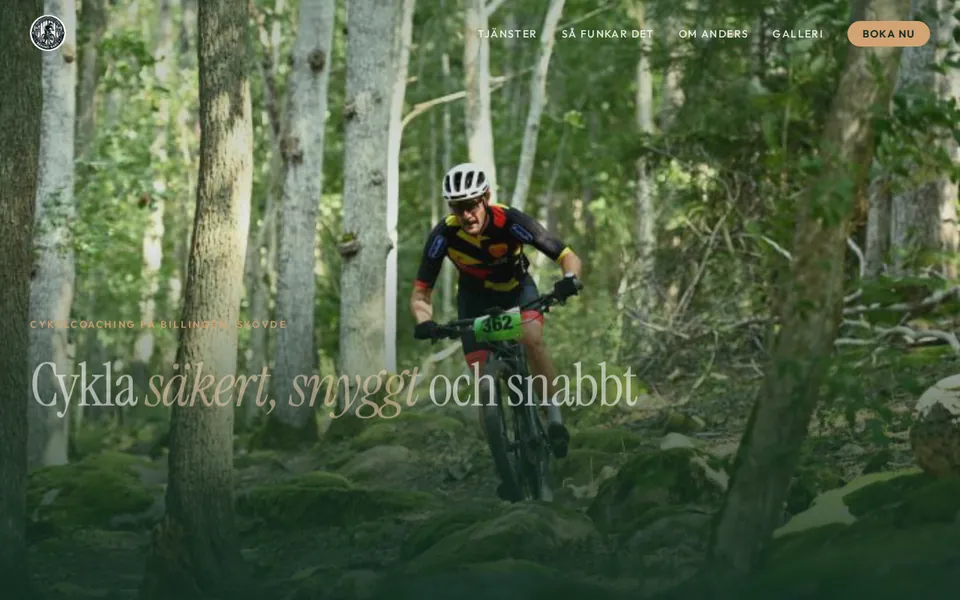
Jag ringde Anders. Vi pratade i femton minuter. Han berättade om sin cykelbusiness -- coaching, guidade turer, Billingen som hemmabas, trettio års erfarenhet på mountainbike. Jag spelade in samtalet.
Nästa dag hade han en färdig webbplats. Komplett med hans ord, hans bilder, hans färgpalett -- extraherad ur de nio foton han mejlade mig. Han hade inte skrivit en enda rad text. Inte ett enda formulär ifyllt. Inte en enda skriftlig beskrivning av vad han ville ha.
Sajten läser som om en copywriter skrev den. Men ingen copywriter var inblandad. Texten kommer från vad Anders sa i telefonen och i ett röstmeddelande han skickade efteråt. Hans egna ord, i hans egen röst, omvandlade till webbklar text.
Paradoxen
Anders beskrev sig själv som "lyhörd och pedagogisk". Det är en formulering som aldrig hade kommit ur en skriftlig brief. I ett formulär hade han skrivit "erfaren MTB-coach" eller "professionell cykelcoach". Men när han pratar -- när han inte tänker på att det han säger ska bli text -- då säger han det som faktiskt stämmer.
Samma sak med "sprida glädjen och kärleken till fler". Det är inte marknadsföring. Det är vad en person säger när de förklarar varför de gör det de gör. Och det blev rubriken.
Det är paradoxen: kunden skrev ingenting, men sajten fångar hans röst perfekt. Bättre än om han hade skrivit det själv.
Hur det fungerar
Pipelinen är inte komplicerad. Den är bara annorlunda.
Samtalet spelas in. Det transkriberas. AI strukturerar transkriptet till en brief -- affärsidentitet, tjänster, målgrupp, ton, vad som saknas. Bilderna analyseras -- AI plockar ut färger, kategoriserar (hero, porträtt, galleri), kontrollerar upplösning. Från briefen scaffoldas sajten. Från bilderna kommer färgpaletten. Ingen designer valde grönt och brunt -- det kom från skogsstigen i Anders foton.
Sen skickar Anders ett röstmeddelande med sin personliga berättelse. Det blir en ny sektion. Han smsar en korrigering. Den är live på minuter.
Totalt: tjugo minuters aktiv tid från klienten. Under en dag från första samtal till live sajt.
Cafésamtalet
Jag sitter på café och förklarar det här för en vän. Han jobbar med telekom, inte webbutveckling. Ändå fattar han direkt. "Du menar att samtalet är kravspecen?" Ja. Exakt.
Han frågar hur det skiljer sig från Loveable eller Bolt -- verktygen som genererar gränssnitt från textbeskrivningar. Och det är en bra fråga, för svaret avslöjar hela poängen.
Loveable börjar med vad du skriver. Du måste formulera vad du vill ha. Det är UI först -- du beskriver hur det ska se ut, och sen fyller du på med data efteråt.
Det här börjar med data. Samtalet ger content. Bilderna ger design direction. Briefen ger struktur. Sajten är det visuella lagret ovanpå -- inte tvärtom.
Det är samma princip jag landat i gång på gång de senaste åren: allt börjar med data. Du drunknar i data, och sen strukturerar du. Aldrig tvärtom.
Positionen ingen har tagit
Alla pratar om AI-kodning. Alla diskuterar agenter, orkestrering, kontextfönster. Men ingen pratar om röst som specifikationslager.
Det är märkligt. För de flesta professionella börjar inte sitt tänkande i text. De börjar med att prata. I möten, i samtal, över lunch. Det är där idéerna formuleras. Det är där kraven egentligen definieras -- i de tangenter och sidospår och halvfärdiga meningar som aldrig hade hamnat i en skriftlig spec.
En 15-minuterssamtal fångar saker som en formulärsvar aldrig gör. Tonfall som avslöjar prioriteringar. Domänreferenser som flödar naturligt men skulle rensas bort i ett dokument. Ärliga självbeskrivningar som ingen skriver i ett textfält.
Och ändå förväntar sig varje AI-verktyg att du börjar med att skriva.
Samma princip, hela vägen
Det här är inte en ny idé. Det är samma princip jag har skrivit om sedan "Allt jag säger hamnar i text" -- att röst är tätare, att transkription förändrar vad som är möjligt, att tre kanaler kan landa på samma ställe.
Skillnaden är att det nu går hela vägen. Inte bara till en mötessammanfattning. Inte bara till en uppföljningslista. Hela vägen från samtal till live sajt.
Anders ringer mig. Han pratar. Han mejlar foton. Han skickar ett röstmeddelande med korrigeringar.
Han har en webbplats i produktion. Och han har inte skrivit ett ord.
Det borde inte vara anmärkningsvärt. Men det är det. Och det säger mer om var branschen står än vad någon AI-demo gör.
Mindtastic om skillnaden i praktiken -- vibe coding vs AI-orkestrering.