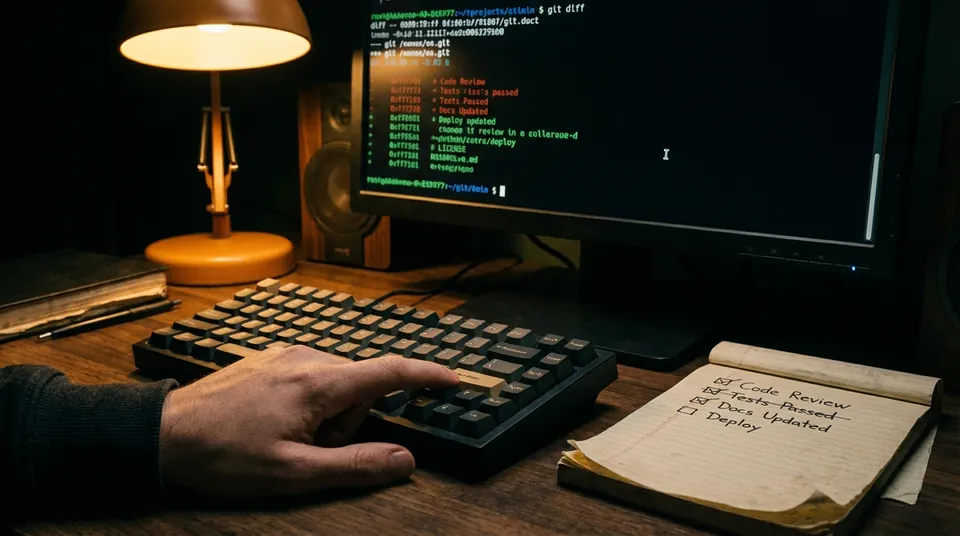
Kontrollpunkten är jobbet
Jag vägrar auto-commits. Jag vägrar auto-changelogs. Jag vägrar att en agent pushar kod utan att jag läst varje rad.
Det låter ineffektivt. Det låter som att jag inte förstår vad verktygen kan. Det låter som friktion.
Det ÄR friktion. Och friktionen är medveten.
"Human-in-the-loop" har blivit en checkbox
Branschen har ett uttryck: human-in-the-loop. Det låter bra i presentationer. Det låter ansvarsfullt. Det antyder att det finns en människa någonstans i processen som godkänner.
Men titta närmare. Titta på vad det faktiskt betyder i praktiken hos de som använder uttrycket.
Det betyder att en människa har möjligheten att reagera. Inte att hon gör det. Det betyder att det finns ett steg i flödet där en person KUNDE granska. Inte att granskningen händer. Det har blivit en organisatorisk checkbox -- "vi har human-in-the-loop" -- som skyddar mot ansvarsfrågor utan att faktiskt skydda mot fel.
Det jag gör är något annat. Det jag gör är att kontrollpunkten ÄR arbetet.
Vad jag faktiskt gör vid varje commit
Varje dag läser jag varje diff. Rad för rad. Jag frågar mig: förstår jag den här förändringen? Behövs den? Är den korrekt? Gör den vad jag bad om -- eller gjorde AI:n något extra som jag inte efterfrågade?
Sedan uppdaterar jag changelog manuellt. Inte för att det tar lång tid. Utan för att ögonblicket där jag formulerar vad som ändrades tvingar mig att förstå vad som ändrades.
Automation tar bort steg. Medveten friktion gör att varje steg räknas.
"Ordningen är oförhandlingsbar."
En auto-genererad changelog är en sammanfattning av något ingen har granskat. Den ser professionell ut. Den är meningslös. Changelog ska uppdateras medvetet, aldrig automatiseras. Ögonblicket du automatiserar dokumentationen av vad du gjort är ögonblicket du slutar förstå vad du gjort.
Varför det ser ut som ineffektivitet
Jag förstår invändningen. Verktyg som auto-committar, auto-dokumenterar, auto-pushar sparar tid. Det är sant. Och om måttet är "antal commits per dag" eller "hastighet från idé till deploy" ser min process ut som en flaskhals.
Men det rätta måttet är inte hastighet per transaktion. Det rätta måttet är hastighet per KORREKT transaktion.
Hur många auto-commits behöver reverteras? Hur många auto-genererade changelogs säger ingenting om varför en förändring gjordes? Hur mycket tid går åt att felsöka saker som aldrig borde ha pushats?
Medveten friktion är långsammare per steg. Men varje steg håller. Och summan av steg som håller är snabbare än summan av steg som behöver göras om.
Varje commit är ett löfte
Det som händer när jag trycker "commit" är inte en teknisk handling. Det är ett löfte. Jag säger: jag har läst det här. Jag förstår det här. Jag står bakom det här.
Ta bort det ögonblicket och du tar bort löftet.
Automation ersätter inte kontrollpunkten -- den eliminerar den. Och den kontrollpunkten är inte ett nödvändigt ont i processen. Den ÄR processen. Den är ögonblicket där professionellt ansvar manifesterar sig i handling.
Det handlar inte om att vara rädd för verktyg. Det handlar om att vägra ge bort det enda som gör att mitt namn på koden betyder något: att jag faktiskt beslutade att den skulle finnas där.
Daglig praktik
Klockan 8 börjar dagen. AI genererar, föreslår, strukturerar. Jag granskar. Varje förändring, varje fil, varje rad. Sedan bestämmer jag vad som lever och vad som dör.
Det tar längre tid. Det kostar mer energi. Men varje rad som lever efter den processen är en rad jag kan svara för. Och att kunna svara för sitt arbete -- det är inte ineffektivitet.
Det är professionalism.
Kontrollpunkten är inte ett hinder på vägen till leverans. Kontrollpunkten är jobbet.
Se även: Jag är smartare än AI (serie 1) och AI tvingar dig att tänka hårdare (serie 12).
Mindtastic om var den mänskliga gränsen faktiskt går -- AI stannar vid PR:en.