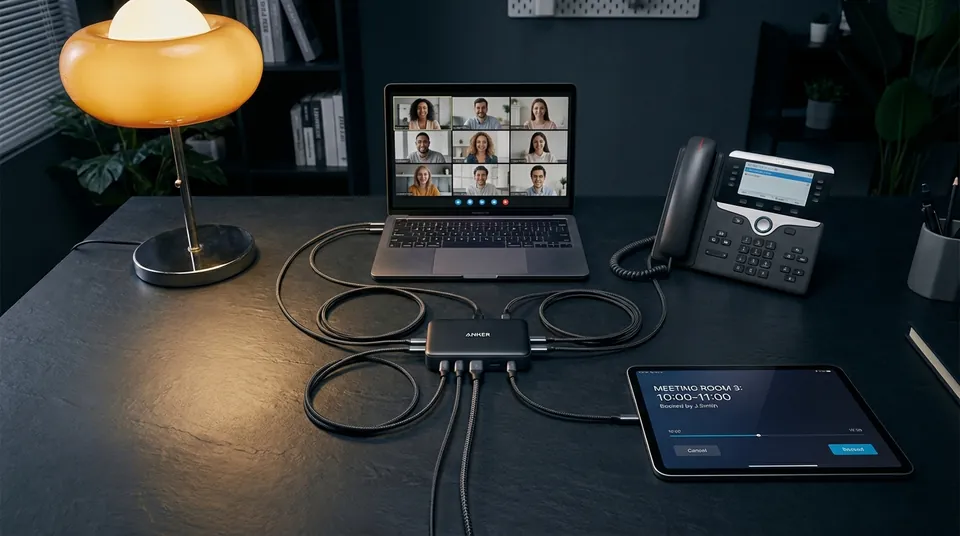
Tre kanaler, ett ställe
Jag har skrivit om att allt jag säger hamnar i text. Jag har skrivit om varför din mötessammanfattning är värdelös. Men jag har inte skrivit om den praktiska frågan som avgör om det faktiskt fungerar: hur fångar du allt?
Svaret är inte ett verktyg. Det är tre kanaler som alla landar på samma ställe.
Onlinemöten
De flesta möten idag sker i Teams, Zoom, Meet. I Teams finns transkription inbyggt -- du kan kopiera texten direkt efter mötet. Det funkar. Det är lite manuellt arbete, lite copy-paste, men det är fullt körbart.
För den som vill ha det mer strömlinjeformat finns Fireflies. Det kopplar in sig i mötena, spelar in, transkriberar. Och det viktiga: det har ett API. Jag hämtar alla mina Fireflies-transkript centralt var femtonde minut. Automatiskt. Inget manuellt steg. Mötet slutar, och inom en kvart ligger transkriptet redo att bearbetas.
Det är inte magi. Det är en integration och ett schemalagt anrop. Men det eliminerar friktionen som gör att folk slutar fånga sina möten efter första veckan.
Fysiska möten
Inte alla samtal sker framför en skärm. Kundmöten, workshops, luncher där det viktiga sägs mellan huvudrätterna -- det behöver fångas också.
Jag använder record-me på min iPhone eller iPad. Varje fysiskt möte spelas in. Ljudfilen skickas sedan vidare genom samma pipeline som mina Fireflies-möten. Samma ställe, samma bearbetning, samma kedja efteråt. Det spelar ingen roll om mötet hände i Teams eller i ett konferensrum -- transkriptet hamnar på samma plats.
I nyare versioner av iOS finns Apple Intelligence, som ger dig möjlighet att kopiera text direkt från inspelningen. Det förenklar ytterligare. Men principen är densamma: fysiska samtal får inte behandlas annorlunda än digitala. Om du bara fångar onlinemöten tappar du hälften av det som faktiskt sägs.
Telefonsamtal
Den tredje kanalen som de flesta missar helt. Inkommande och utgående samtal -- de som ofta innehåller de snabbaste besluten, den mest ofiltrerade informationen, de saker folk säger i telefonen som de aldrig hade skrivit i ett mejl.
Jag använder Sonetel som telefonitjänst, där jag också arbetar. De har en funktion för samtalsinspelning, och ett API för att hämta ljudfilerna. Samma princip som Fireflies -- automatisk hämtning, centralt lagrad, redo för transkription.
Det är den kanal folk oftast glömmer. Och det är den kanal där den mest värdefulla informationen ofta finns, just för att telefonsamtal är spontana, oförberedda, ärliga.
Konvergenspunkten
Tre kanaler. Ett ställe.
Onlinemöten via Fireflies. Fysiska möten via record-me. Telefonsamtal via Sonetel. Alla landar i samma pipeline. Alla blir transkript. Alla blir sökbar, strukturerbar text.
Det är inte tre separata system. Det är tre ingångar till samma system. Och det är poängen -- det spelar ingen roll var samtalet sker. Det fångas. Det bearbetas. Det försvinner inte.
Sedan tar kedjan vid. Förberedelse inför nästa möte baserat på vad som sades i det förra. Sammanfattning, beslut, uppföljning. Projektspårning om det behövs. Daglig överblick. Allt det som jag beskrivit i de andra artiklarna -- men det börjar här. Med att ljudet faktiskt fångas, oavsett kanal.
Men allt får inte hamna var som helst
Det här är delen jag inte skrev när jag först beskrev pipelinen, och den är viktigare än själva pipelinen.
Tre kanaler landar på ett ställe. Men vilket ställe som är tillåtet är inte en fråga med ett svar. Det beror på vad samtalet var.
En röstanteckning jag pratar in till mig själv har i praktiken inga krav alls. Ett internt avstämningsmöte har få. Ett kundmöte där någon åtar sig något börjar bli avtalsrelevant. Ett lönesamtal, ett styrelsemöte, ett vårdsamtal -- där finns krav som inte är förhandlingsbara, och de gäller från det ögonblick inspelningen startar.
Poängen är inte att man ska vara rädd. Poängen är att kravet är en egenskap hos materialet, inte en inställning i systemet. Man bygger inte "en säker pipeline" och är klar. Skruvar man upp kraven till den strängaste nivån blir allt så omständligt att man slutar fånga. Skruvar man ner dem till den bekvämaste nivån hamnar fel sak på fel ställe förr eller senare.
Och en sak som nästan alltid slås ihop men är två frågor:
- Var lagras materialet?
- Var behandlas det?
Svensk lagring med amerikansk bearbetning löser den ena och inte den andra. Omvänt kan en modell med kinesiskt ursprung vara helt oproblematisk om vikterna körs på egen hårdvara och ingenting lämnar nätet. Det är behandlingen som avgör, inte flaggan på leverantören.
För egen del laborerar jag. Det mesta jag fångar har inga särskilda krav, och då använder jag det som är smidigast. Men den dagen materialet har ett krav måste kedjan kunna svara på det -- och det svaret går inte att konstruera i efterhand.
Vilket leder till den enda praktiska regeln jag har: bestäm vid inspelningen, inte efteråt. Den som satt i mötet vet vad mötet var. Ingen vet det tre månader senare när filen ligger bland tusen andra.
Det enda som krävs
Infrastrukturen är inte komplicerad. Det är inte dyrt. Fireflies har rimliga planer. Sonetel likaså. record-me är ett verktyg jag byggt själv, men det finns alternativ.
Det som krävs är beslutet att faktiskt göra det. Att bestämma sig för att inget samtal är för oviktigt för att fångas. Att sluta behandla fysiska möten och telefonsamtal som undantag från systemet.
De flesta som säger att de jobbar med AI-stödda arbetsflöden fångar sina Teams-möten och inget mer. Det är en tredjedel av bilden. Resten försvinner.
Ingenting behöver försvinna. Infrastrukturen finns. Kanalerna finns. Det som saknas är vanan -- och vanan att ställa frågan om vad materialet faktiskt är, samtidigt som man trycker på inspelning.
Se även: Allt jag säger hamnar i text (serie 2) och Text är data (serie 8).
Mindtastic om hur man bygger den vanan systematiskt -- hur röst blir strukturerad mötesdokumentation.