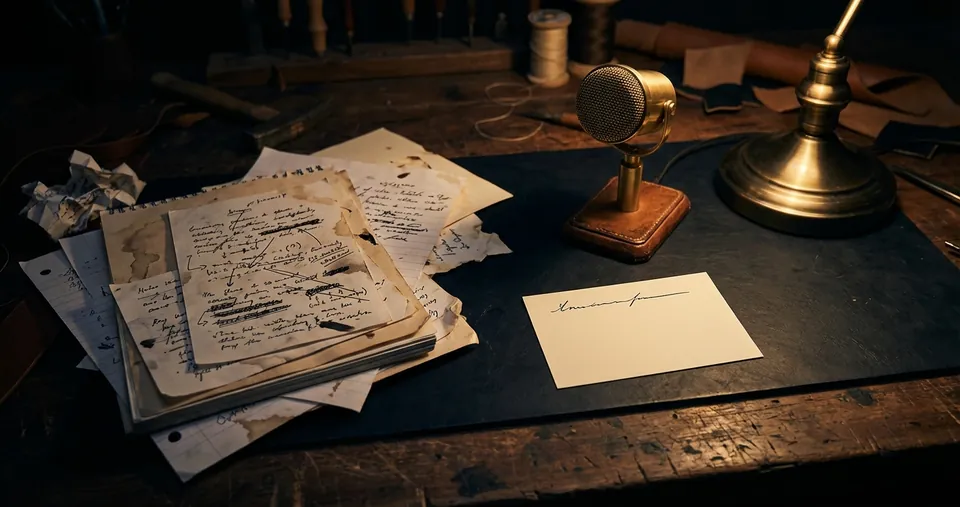
Kladdigt och krispigt
En kollega reformulerade det jag gör. Jag hade pratat om röst som råmaterial, om att allt jag säger hamnar i text, om hur information tätnar när den inte filtreras av ett formulär eller en brief. Han lyssnade en stund och sa: "Kladdigt och krispigt."
Jag stannade upp. För det var det. Fyra ord som ersatte ett stycke förklaringar.
Sen lade han till -- nästan i förbifarten -- att det egentligen var "knisprigt". Inte krispigt. Knisprigt. Ett ord han uppfunnit i stunden, en portmanteau som rymde båda lägen på en gång: det organiska och det precisa, sammansmälta till ett. Jag frågade vad han menade. Han sa att krispigt antyder renhet, klarhet, ett slutläge. Knisprigt är i rörelse. Det knäpper till. Det är det ögonblick när ostrukturerat material plötsligt har form -- inte för att strukturen påtvingades, utan för att den uppstod ur materialet.
Jag hade aldrig haft ett ord för det. Nu har jag tre.
Vad det egentligen handlar om
Det intressanta är att distinktionen inte primärt handlar om vad som kommer ut ur AI. Den handlar om vad du stoppar in.
Det finns två lägen för röstinput, och de är inte utbytbara.
Kladdigt input är när du inte har ett strikt mål. Du beskriver fritt. Du associerar, avviker, återvänder, tappar tråden och hittar den igen. Du låter AI tolka -- semantisk tolkning, antaganden, inferens. Du säger "vi vill förstå var arbete fastnar i flödet" utan att definiera vad fastnar betyder eller vilket flöde du avser. Det är inte slöhet. Det är en medveten strategi. Kladdigt input är kraftfullt när du utforskar, när du beskriver ett problem du inte fullt förstår ännu, när det du vill ha är att AI ska spegla och strukturera det du redan vet men inte har formulerat.
Krispigt -- eller knisprigt -- input är något annat. Det är när du vet exakt vad du vill ha. "Lägg till ett fält för ärendetyp." "Ta bort det här avsnittet." "Flytta prioriteringen till kolumnen längst till vänster." Inga antaganden välkomnas. Inget tolkningsutrymme efterfrågas. Du är kirurgisk. Och AI förväntas vara det med.
Felet de flesta gör är att de blandar ihop lägena. De ger krispiga instruktioner när de egentligen utforskar -- och producerar output som är precis fel på ett träffsäkert sätt. Eller de ger kladdigt input när de behöver ett specifikt resultat -- och undrar varför AI "inte förstår vad de menar."
Knisprigt är Torbjörns ord för det ögonblick när du medvetet rör dig från det ena läget till det andra. Inte en slutprodukt. En övergång.
Fem minuter innan, fem minuter efter
I praktiken ser det ut så här för mig.
Innan ett samtal spelar jag in en kort röstnotat. Vad vet jag? Vad vet jag inte? Vad är det viktigaste att ta reda på? Det är kladdigt input. Inget strikt mål. Jag tänker högt mot mikrofonen och låter AI sammanfatta och strukturera. Ibland hamnar jag i rätt frågeställning. Ibland avslöjar sammanfattningen att jag hade fel om vad mötet egentligen handlade om.
Efter samtalet spelar jag in ett nytt notat. Det är okularbesikning -- ett tekniskt uttryck jag lånat från byggbranschen, som betyder att verifiera med egna ögon snarare än att förlita sig på ritningar och protokoll. Jag lyssnar inte på inspelningen. Jag sitter inte med transkriptet. Jag berättar för mikrofonen vad som faktiskt hände, vad jag lade märke till, vad som avvek från det jag väntade mig.
Det är fortfarande kladdigt input. Men efterhandskladdigt. Det fångar saker som en transkription aldrig fångar -- tolkningen av pauser, den känsla av att samtalet vände vid ett visst ögonblick, den sak som sades med lite för mycket betoning.
Sen är det krispigt. Specifika uppföljningar. Specifika korrigeringar. Specifika changes. Inte ett dokument, utan en serie präcisa redigeringar av den bild som det kladdiga inputet etablerade.
Ingenting av det är automatiserat. Och det är poängen.
Det som inte hade ett namn
Jag har skrivit om röst som råmaterial sedan 2023. Om hur ett 15-minuterssamtal bär mer information än ett formulär. Om hur kunden som aldrig skriver ett ord ändå hamnar i en sajt som låter som honom -- precis för att det kladdiga inputet fångade det som ett krav aldrig hade formulerat.
Men jag hade inte ett ord för kalibreringen. För det aktiva valet att vara i kladdigt läge när man utforskar och krispigt läge när man preciserar. Det var en praktik utan ett namn.
Knisprigt är närmast. Det rymmer övergången -- det organiska som knäpper till form utan att tappa sin ursprungliga röst.
AI översätter. Det är vad det gör. Det tar kladdigt input och skapar knisprigt output. Det tar krispigt input och applicerar det präcist. Men vem som bestämmer vilket läge man är i, och vem som bedömer om output faktiskt fångade rätt sak -- det är inte AI. Det är det enda jobbet som inte kan delegeras.
Varför positionen fortfarande är öppen
Alla pratar om prompting. Om hur man skriver bättre instruktioner. Om agenter och orkestrering.
Ingen pratar om kalibrering av det egentliga ingångsläget -- om att träna sig att veta när man är i ett kladdigt moment och när man behöver knisprigt. Det är en mänsklig kompetens. Det kräver att du förstår vad du faktiskt försöker åstadkomma, inte bara vad du skriver i prompten.
Positionen "röst som primärt ingångslager för AI-arbete" har stått öppen i tre år. Det verkar fortfarande ingen ha tagit den.
Det är märkligare än det borde vara.
Se även: Allt jag säger hamnar i text (serie 2) och Från samtal till sajt (serie 9).
Mindtastic om de tre förhållningssätten i praktiken -- vibe coding vs AI-orkestrering.